From Doubt to Data: Turning “What-Ifs” Into Facts
Fixating on what-if questions invites doubt, which breeds confusion and fear. A worried mind hesitates, leading to procrastination and halting progress. The simple but powerful antidote is to focus on facts, not fears, as facts ground us in reality. Stop guessing—simulate.
When we ask endless what-if questions, we open the door to doubt. Doubt breeds confusion and fear—and when confusion and fear take hold, productivity collapses. A worried mind hesitates; hesitation leads to procrastination, and procrastination prevents progress.
To stay productive and make sound decisions, we must focus on facts, not fears. Facts anchor our thinking in reality. They quiet unnecessary worries, eliminate distractions, and allow us to act with confidence. When decisions are grounded in evidence, we move forward with clarity and purpose.
Teams that work from a shared understanding of the facts—not from speculation—can collaborate more effectively. They solve problems faster, make better choices, and reach goals more efficiently. In short, clarity drives productivity, and productivity drives success.
Asking the Right Questions
Not all questions create doubt—only the wrong kind do. Instead of asking “What if something goes wrong?”, we should ask questions that help us discover facts:
- What do we know for certain?
- What variables can we measure?
- What outcomes can we predict based on current data?
These questions remove bias and provide an objective view of reality. When applied to teamwork, this fact-based approach ensures everyone is aligned, informed, and moving toward a common goal.
An Illustrative Example
Imagine you run a small manufacturing operation. A client asks for 2,500 widgets in five days. You have three workers, two machines, and typically produce 300 widgets per day—though on rare occasions you’ve reached 500.
You begin to wonder:
- What if we can’t maintain that pace?
- What if someone gets sick?
- What if a machine breaks down?
- What if we run short on materials?
- What if we lose the client if we say no?
Soon, uncertainty spreads through your team. Doubt grows, morale drops, and productivity follows.
How Simulation Changes Everything
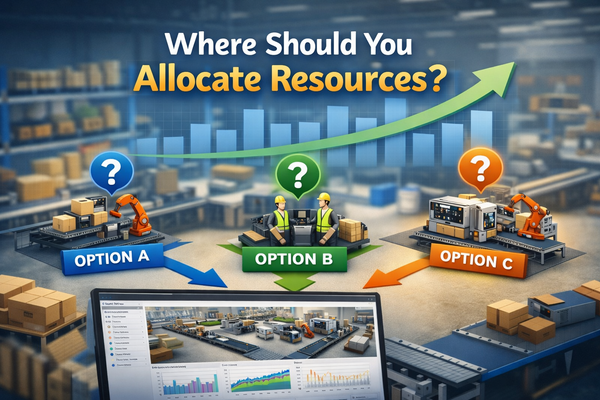
Now imagine you have a simulation model of your production line. Instead of guessing, you can test scenarios and base decisions on data, not fear.
You might ask:
- How many widgets can we produce with two machines and one, two, three, or four workers?
- How many extra hours are required to hit 500 widgets with fewer workers?
- If a machine is down for four hours, how much overtime is needed to stay on schedule?
Simulation replaces speculation with evidence-based insight. It allows you to visualize outcomes, understand constraints, and identify solutions before they become problems.
By exploring realistic scenarios through simulation, you can plan with confidence, minimize risk, and lead your team with certainty.
Stop Guessing. Simulate.
When decisions are driven by facts instead of fears, progress becomes predictable.
Replace doubt with data. Replace confusion with clarity.
Stop guessing—simulate.