Operations Systems vs. Technical Systems: Why the Difference Matters in Simulation
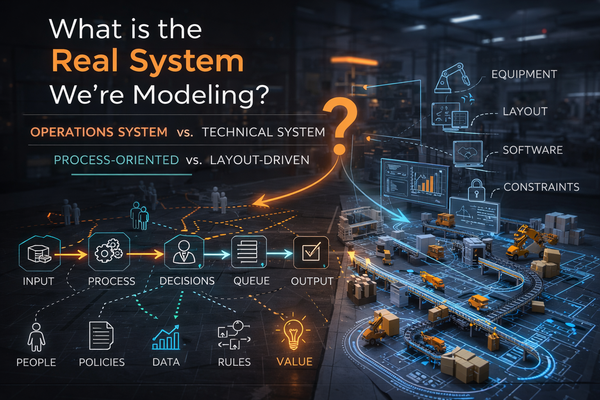
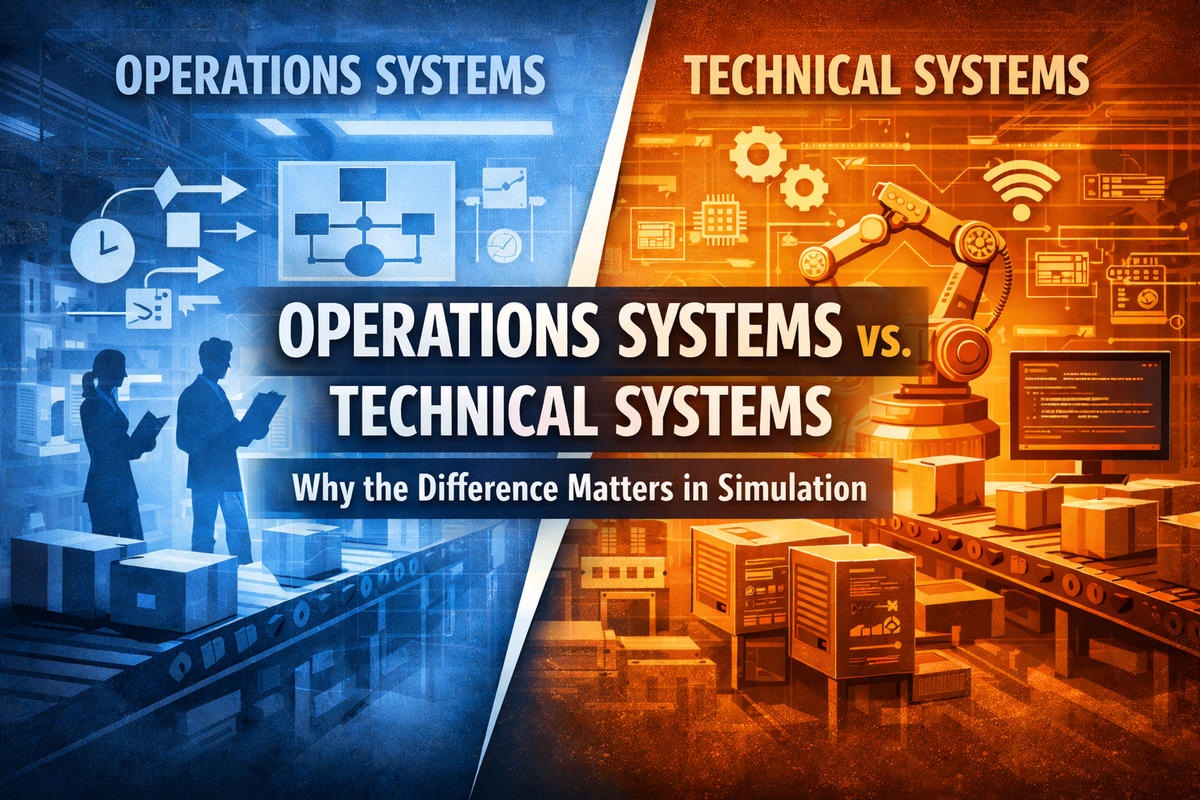
An operations system is not the same thing as a technical system. While technical systems focus on machines, software, and reliability, operations systems define how value is actually delivered through people, processes, and flows.
Before modeling anything, it’s important to be brutally clear about the type of system you’re truly working with.
An operations system is the complete value-delivery machine. It’s how an organization transforms inputs—people, materials, information, time—into outputs that customers value. This includes workflows, decision rules, resource limitations, handoffs, and human behavior. If it’s about how work is performed, you’re in operations-system territory.
A technical system, by contrast, is the supporting infrastructure. Hardware, software, machines, networks, and automation—things that perform specified functions reliably and consistently. Technical systems are essential, but by themselves they don’t generate value. They facilitate operations; they don’t create them.
Here’s the punchline: most real-world problems aren’t technical—they’re operational.
That’s exactly where simulation tools come into play. They don’t just simulate machines or software logic; they simulate flows, constraints, variability, and decision-making throughout the entire operations system. The technical components matter — but only in how they interact with people, processes, and demand.
If you simulate only the technical system, you get false confidence.
If you simulate the operations system, you get insight.
That distinction is small on paper—and decisive in practice.